
Does the Astrum Temple believe in one all-powerful God?
This is an excellent opportunity to share what what is called the Philosophy of the Jewel. Imagine a diamond, carved with intricate facets that glimmer in the sunlight. Now imagine that this diamond represents the totality of God; strong and perfect. As you hold the jewel to the sun, you can see the light dance and glitter between each and every facet; innumerable and precise angles that complete the brilliance of its design. Each of those facets is an aspect of God; a side of divinity that reveals itself depending on how you turn the diamond.
This is the mystery of the ALL; one and many simultaneously. Known by many names, by many cultures. Feminine, masculine, and gender-neutral all at once and not at all. The mystery of God calls to each of us through the guise of what we understand, what is familiar, and what resonates with our soul. The ALL is found across the world, in classical Greek and Roman pantheons, in the collective force of ancient Egypt’s two thousand gods, Hinduism’s constellation of countless deities, and in the natural beauty of the divine observed by Indigenous Americans.
The Astrum Temple understands the true nature of God to be unknown to human minds. What we see are reflections of this brilliant force illustrated across time and history. The Temple adopts esoteric Judeo-Christian symbolism because that is what resonates with us. This is how we choose to celebrate the mystery of our divine parentage.
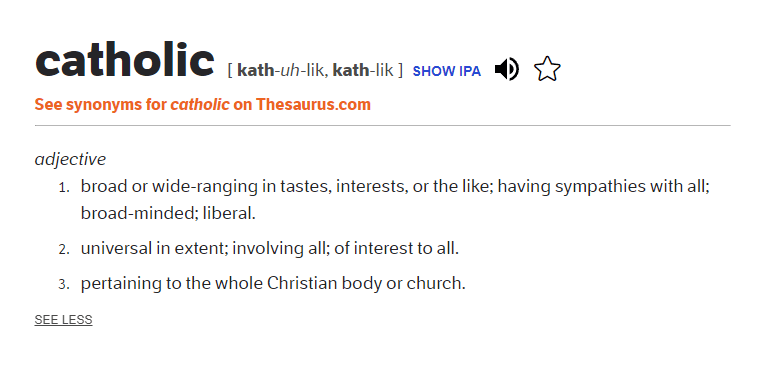
Do we consider ourselves “catholic”?
The standard definition of the term “catholic” is derived from the Greek adjective katholikos, meaning “universal”. There exists, however, a separation between a capitalized noun variation and the lowercase adjective form of the word. “Roman Catholic” is the noun variation, indicating a union of Christian beliefs with the Church of Rome.
The Astrum Temple uses the lowercase form of this term, members of the Temple aim to bring about the original message of this word, as a term of universal acceptance. Not only in regard to individuals, but the acceptance of other ways of life, religious traditions, and personal experience. From the beginning of time, humankind has sought to understand our role in the cosmos – and regardless of their culture or religious beliefs – their pursuit of gnosis was and is always valid.
We consider ourselves catholic because we truly accept the truths and insights of others – as noted in our own theology. We acknowledge the richness of our tradition by incorporating the revelations of other philosophies.
Does the Astrum Temple have a physical location?
As of now, the Temple exists solely as an online presence. However, the hope is to raise enough money to purchase or rent a facility in the near future to cater to our local members.
What is the Alexandria Project?
The Alexandria Project aims to “rebuild in spirit” the historical Library of Alexandria. Members of the Astrum Temple have been working since 2021 to create a physical and digital space for the world’s most influential and important texts, allowing public access to these works of scholarship. The Project hopes to partner with existing libraries to expand and share esoteric, scientific, and philosophical information with the world.
What is the Council of Luma?
The Council of Luma is the governing body of the Astrum Temple consisting of elder members. The role of the Council is to make decisions regarding dogma and reason, communicate with religious and secular authorities, and advance the objectives of community, inclusion, and education for the general public.
 Ordo Templi Astrum