
The foundational pillars of our Hermetic tradition are the Seven Angels of the Astra Planeta; celestial emissaries and guardians of the cosmic order, each attributed with a planetary sphere in our solar system.
These celestial figures are invoked through prayers, rituals, and meditation, providing spiritual guidance, and aiding adherents in their pursuit of cosmic understanding and wisdom. It is important to note that they are not worshipped but venerated as spiritual guides and aids on our path towards gnosis and oneness with the ALL.
The Seven Books of the Astra
The Sun – Nachiel: In esoteric philosophy, Nachiel governs the harmonizing light that sustains creation and awakens consciousness. He is the archetype of the Inner Sun, the radiant center within each being that reflects divine order and purpose. Nachiel is revered as the Crown of Day, the spirit of sacred clarity and creative will. He is the teacher of lucidity and integrity, guiding initiates to shine without arrogance and to embody illumination as both warmth and wisdom.
The Moon – Malkah: In traditional planetary angelology, Malkah is the angelic intelligence of the Moon. In Hermetic symbolism, Malkah governs intuition, imagination, and the mysteries of transformation, embodying the Moon’s rhythm of waxing and waning. She is the gentle regulator of tides, both celestial and emotional, teaching that all illumination is borrowed, all growth cyclical.
Mercury – Tiriel: In traditional Hermetic and planetary angelology, Tiriel is the angelic intelligence of Mercury, the counterpart to the planetary spirit Taphthartharath. Tiriel governs the higher, harmonizing aspects of Mercury, communication, intellect, eloquence, and reason illuminated by insight. Where his shadow-spirit embodies chaos and deception, Tiriel represents the clarity and precision that make knowledge a vessel of truth.
Venus – Hagiel: Hagiel is the Seraph of the Morning Star, the luminous current that transforms yearning into sacred connection. Where Lucifer represents the raw radiance of Venusian light, Hagiel is its guiding hand: the wisdom that teaches love without possession, art without vanity, and harmony born of contrast. Through Hagiel’s influence, the Adept learns that beauty is not ornament, but revelation; the universe recognizing itself through affection and grace.
Mars – Graphiel: Graphiel is the angelic intelligence of Mars, counterpart to the spirit Bartzabel. He embodies the disciplined and strategic aspect of martial power, will refined by wisdom rather than ruled by anger. Where Bartzabel symbolizes raw force and conflict, Graphiel governs controlled strength, courage in adversity, and the purification of passion into purpose. Graphiel stands as the Silent Blade of the Divine Will, the embodiment of disciplined will and catalytic force.Bartzabel channels the raw power of conflict into purposeful motion, teaching that true strength is born not of domination but of mastery over one’s inner storms.
Jupiter – Jophiel: To the Order of the Astrum Temple, Jophiel is revered as the Golden Architect, the intelligence that orders the vastness of the cosmos with beauty and purpose. His influence grants clarity to judgment, generosity to power, and equilibrium to growth. To contemplate Jophiel is to seek wisdom that uplifts rather than dominates, the kind of knowing that expands consciousness like light diffused through gold.
Saturn – Agiel: In classical Hermetic and Renaissance magic texts such as the Key of Solomon and later planetary grimoires, Agiel is portrayed as the moderating mind of Saturn. Where Zazel personifies restriction, decay, and the destructive aspect of time, Agiel represents order, patience, and wisdom, the part of Saturn that structures reality rather than shatters it. His sphere governs limits, endurance, and the slow crystallization of form.
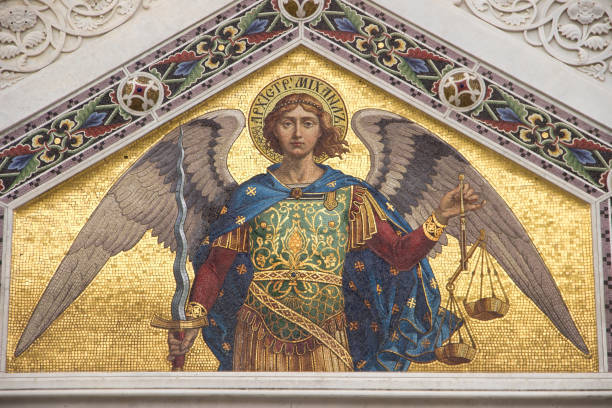
In the cosmology of the Astrum Temple, these Seven Angels not only oversee the celestial bodies but act as guardians for the faithful. Each angel can influence our spiritual self-development, personal growth, and intentions.
These angelic correspondences are woven into our liturgy, iconography, and spiritual practices. Each angel retains specific days, rites, and prayers devoted to their celestial sphere of influence. Their guidance can be sought when their associated planets are prominent in the sky, during significant astrological events, or simply through prayer.
By acknowledging these heavenly guardians, the Temple encapsulates a connection between the microcosm of the individual’s inner world and the macrocosm of the vast universe.
The Angel of the Earth: Saint Uriel
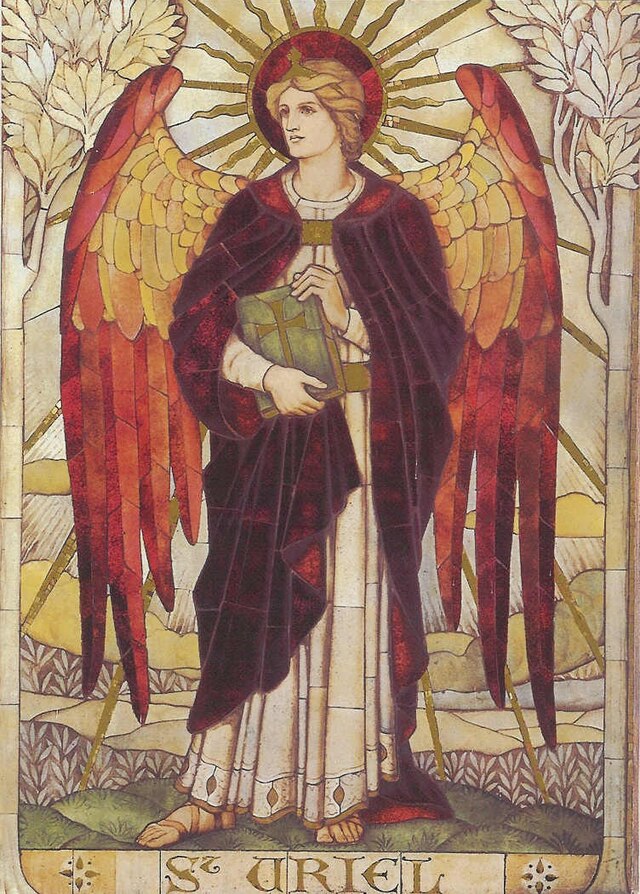
Within the astronomical ecosystem of our solar system, Uriel stands as Earth’s Guardian Angel, a symbol of the ALL’s influence on the planet, rooting our celestial-focused faith in the concrete reality of environmental stewardship and ecological mindfulness. Uriel’s presence emphasizes a living spirituality that sees Earth not just as a home but as a sacred trust requiring reverence, understanding, and active protection.
Uriel, whose name can be interpreted as “Light of God” or “Flame of God,” is commonly identified as an archangel in various religious traditions, including some strands of Judaism and Christianity. Not always included in canonical texts, Uriel’s role is frequently expanded in apocryphal lore, mystical and esoteric traditions where he is often associated with wisdom, illumination, and as a guide for the prophets.
The Manifestations of Uriel
As the Embodiment of Wisdom and Nature: Uriel is celebrated as the angelic force that embodies the wisdom found in our natural world. As the guardian of Earth, Uriel’s guidance can help humanity understand and live harmoniously with the environment.
Of Stewardship and Protection: As the Guardian Angel of Earth, Uriel is seen as the steward of the planet, charged with protecting the natural order and encouraging human beings to be compassionate caretakers of their home.
The Messenger of Transformation: Uriel is sometimes associated with change and transformation, given the angel’s traditional connection with prophecy. This, in turn, extends to the Earth’s dynamic nature, the changing seasons, and the progression of human civilization.
An Advocate for Balance: Uriel can be invoked as the oracle for maintaining the delicate balance between humanity’s development and the preservation of the Earth’s ecosystems, mirroring the interconnectedness of all things.
A Patron of Earthly Knowledge: Uriel is considered the source of earthly wisdom, inspiring scientific discovery, ecological understanding, and deeper reflections about the material world.
An Inspiration for the Arts: Given the breathtaking beauty and intricacy of nature, Uriel is heralded as a muse for artists, musicians, and poets who capture the splendor of the world.
Of Solidarity in Crisis: In times of environmental disaster or crisis, Uriel is our beacon of hope and the rallying point for prayer and concerted action within the community of the Earth.
The Lesser Angels of the Solar System
In Western astrology and certain esoteric traditions, Neptune, Uranus, and Pluto – while not visible to the naked eye and therefore not part of the classical planetary system known to the ancients – have nonetheless been associated with particular attributes. However, in traditional systems, these planets were not assigned specific archangels due to their discovery long after the attribution of archangels to the classical planets.
Nevertheless, the Temple extends the archangelic correspondences to these outer planets within a modern esoteric context, as the Lesser Angels of the Solar System. These angelic beings are the hidden observers and guardians of our cosmic borders. They are called the “Lesser Angels”, not because they have limited power, but possess a lesser inclination to intervene in matters of a single soul. However, this being said, they have cast their gaze upon the Earth in the past. Their intercessions have brewed radical transformations in human history.
Neptune – Archangel Raziel: Neptune is generally associated with spirituality, dreams, mysticism, and illusions. In extending archangelic symbolism, the Temple assigns the angel Raziel as the embodiment of the boundless and mystical nature of water. He is a figure cloaked in mystery, the arbiter of magic and patron of esoteric scholars.
Uranus – Archangel Jegudiel: Uranus is aligned with sudden change, innovation, revolution, and technology. The angel of Uranus exemplifies the characteristics of the visionary spirit, possessing a propensity for guiding transformation and progress. Jegudiel is the angel of kings, judges, and those in the position to inspire change. Heavy is the head who bears the crown of responsibility.
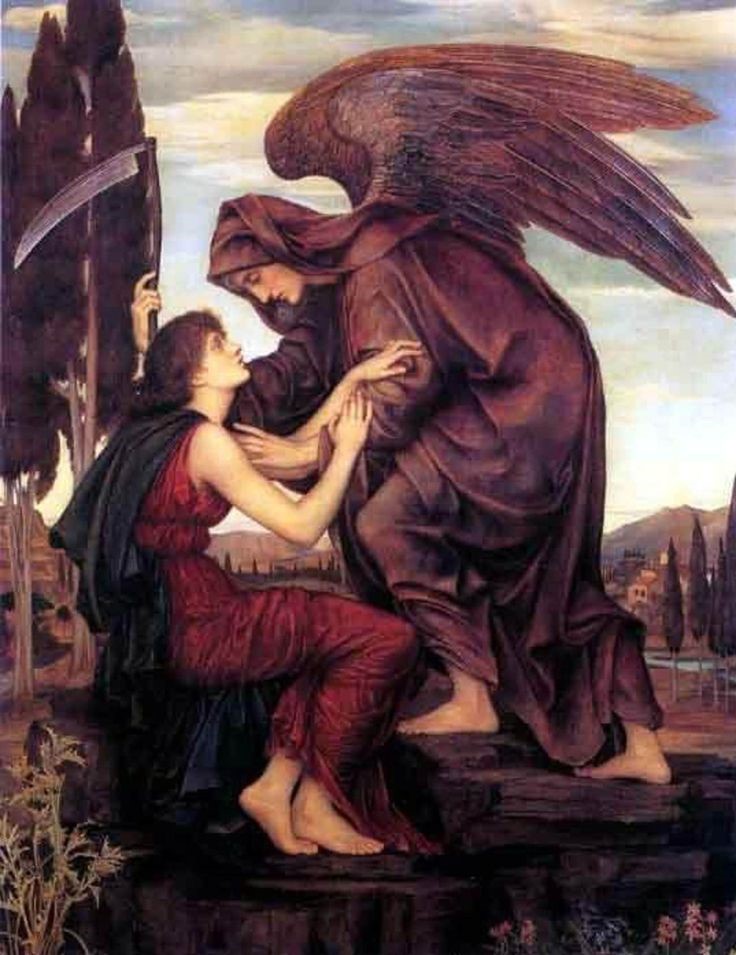
Pluto – Archangel Azrael: Pluto is linked to transformation, death, and the subconscious. In modern astrology, it represents deep change, rebirth, and renewal, often through challenging circumstances. The angel attributed to the governance of such intense processes is Azrael, who, in various traditions, is associated with transitions and life changes, although typically in the context of mortality and crossing over.
It is important to note that in established Judeo-Christian angelology, there are no angels named specifically for these planets, as these associations are a modern invention. Any such correspondences created for Neptune, Uranus, and Pluto are unique to the Astrum Temple and require an expansion of tradition to fit these new interpretations. Additionally, it is a part of the Temple’s own teachings to explore and define the roles and symbolism of these contemporary celestial guardians.
 Ordo Templi Astrum